
T. E. Willis

October 2018
Biography – 略歴
Taun Eric Willis has spent his life moving between worlds that rarely intersect. He has written novels about time travel, designed complex computer systems, patented cryptographic protocols, composed music, taught the next generation of technologists and business leaders, and pursued independent research into some of the deeper questions of modern physics. His path has taken him from the deserts of Arizona to the mountains and temples of Japan, from early computer laboratories to government and corporate seats of power, and from riveting fiction to profound scientific research. Across all of it runs a persistent fascination with the unknown—and a conviction that the most interesting discoveries often begin where established explanations appear incomplete.
トーン・エリック・ウィリスは、普通なら交わることのないいくつもの世界を行き来しながら、その人生を歩んできた。タイムトラベルを題材にした小説を執筆し、複雑なコンピュータシステムを設計し、暗号プロトコルの特許を取得し、音楽を作曲し、次世代の技術者やビジネスリーダーを育てる一方で、現代物理学のより深遠な問いに独立研究者として取り組んできた。その歩みは、アリゾナの砂漠から日本の山々や寺社へ、初期のコンピュータ研究室から政府や大企業の中枢へ、そして人を惹きつけるフィクションの世界から、物理世界の本質に迫る科学研究へと広がっている。そのすべてを貫いているのは、未知なるものへの尽きることのない関心と、最も興味深い発見は、既存の説明では何かがまだ足りないと感じられるところから始まるという確信である。
Childhood – 幼少期
Willis was born in Arizona and grew up beneath the immense skies of the Sonoran Desert, a landscape that helped shape both his imagination and his lifelong curiosity about the natural world. As a boy, he explored the Salt River basin in search of “water dog” salamanders, camped with friends deep in the Tonto National Forest, and watched Halley’s Comet cross the night sky from a remote desert trail beneath a sky crowded with stars. The desert—with its vast distances, ancient mountains, violent dust storms, and relentless heat—gave him an early sense that the world was much larger, stranger, and more remarkable than it first appeared.
ウィリスはアリゾナ州に生まれ、果てしなく広がるソノラ砂漠の空の下で育った。その風景は、彼の想像力と自然界への生涯にわたる好奇心の両方を形づくることになった。少年時代には、ソルトリバー流域で「ウォータードッグ」と呼ばれるサンショウウオを探し、友人たちとトント国有林の奥深くでキャンプをし、星で埋め尽くされた夜空の下、街から遠く離れた砂漠の小道からハレー彗星を見上げた。果てしない大地、太古からそびえる山々、激しい砂嵐、そして容赦のない暑さに囲まれた砂漠は、世界とは一見した以上に遥かに大きく、不思議で、驚きに満ちた場所なのだという感覚を、彼の中に早くから育んだ。
Technology – テクノロジー
Willis’s fascination with technology began early. At the age of ten, he was caught hacking into the mainframe of an internationally known telephone manufacturer. He learned from his mistake—that is to say, he learned how he had been discovered, and was not caught again. By high school, he had already moved well beyond typical computer instruction. On the first day of his computer class, he told his teacher that he had completed the textbook; that afternoon, he tested out of the course. He later joined his instructor and four senior students in establishing the school’s first advanced computer programming class—an early indication that technology would become not simply a profession, but a defining thread throughout his life.
ウィリスのテクノロジーへの関心は、幼い頃から始まっていた。10歳のとき、国際的に知られる電話機メーカーのメインフレームにハッキングしているところを発見された。彼はその失敗から学んだ――つまり、どうして見つかったのかを理解し、それ以降は捕まらなかったのである。高校に入る頃には、すでに一般的なコンピュータ教育の範囲を大きく超えていた。コンピュータの授業初日、彼は教師に教科書をすでに最後まで終えていると伝え、その日の午後には試験を受けて通常の授業課程を修了した。その後、担当教師と4人の上級生とともに、学校初となる高度なコンピュータ・プログラミングのクラスを立ち上げた。テクノロジーが単なる職業ではなく、生涯を通じて彼を形づくる重要な軸となることを予感させる、早い時期の出来事だった。
Japan – 日本
Willis spent a substantial part of his young adulthood in Japan and considers Hōfu, in Yamaguchi Prefecture, his Japanese hometown. He bicycled mountain trails throughout Yamaguchi, walked the beach at Tonomi, visited the Great Buddha of Kamakura, and once cooked rice crackers in a mountain cave near a Tenmangū shrine with a group of Shinto priests. On another occasion, he secured a private tour of Mazda’s automotive plant while posing as an American automotive executive. He speaks fluent Japanese and maintains a deep and abiding affection for Japan, its people, and its culture.

Technology and Career – テクノロジーとキャリア
For more than thirty years, Willis built a career at the intersection of software engineering, cryptography, and business. He designed complex systems for major corporations and government organizations, developed and patented cryptographic technologies, and founded several technology companies of his own. His work required not only technical depth, but an understanding of how technology, security, regulation, and commercial strategy converge in the real world. That experience eventually brought him before a committee of the United States Congress, where he contributed technical insight to the drafting of legislation that is now implemented across the U.S. financial industry. After decades in technology and business, he brought that experience into the classroom, where he now teaches computer science and business management in Arizona.
ウィリスは30年以上にわたり、ソフトウェア工学、暗号技術、そしてビジネスが交差する分野でキャリアを築いてきた。大企業や政府機関のために複雑なシステムを設計し、暗号技術を開発して特許を取得するとともに、自ら複数のテクノロジー企業を創業した。その仕事には高度な技術力だけでなく、テクノロジー、セキュリティ、規制、そして事業戦略が現実の社会でどのように結びつくかを理解する力も求められた。そうした経験から、米国議会の委員会に招かれ、現在アメリカの金融業界で実施されている法制度の策定に技術的知見を提供したこともある。数十年にわたるテクノロジーとビジネスの経験を経て、その知識を教育の場へと持ち込み、現在はアリゾナ州でコンピュータサイエンスとビジネスマネジメントを教えている。
Physics Research – 物理学研究
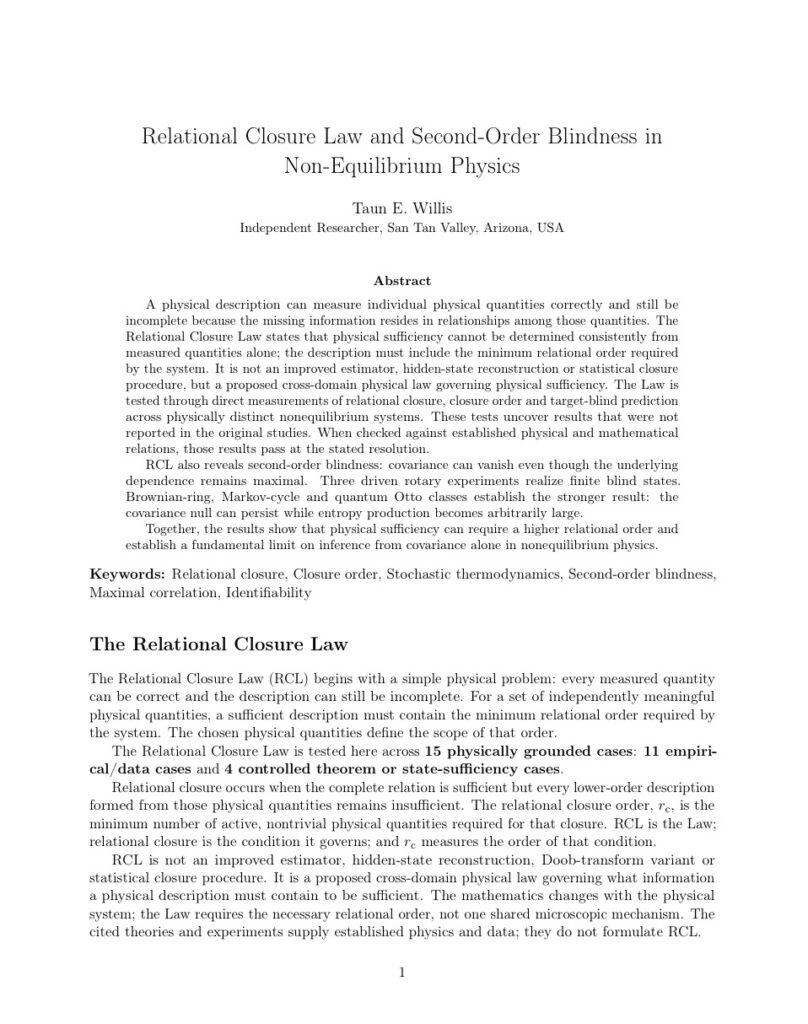
Alongside his work in technology, business, and education, Willis conducts independent research in theoretical and computational physics. His interests include nonequilibrium physics, stochastic thermodynamics, complex systems, statistical dependence, and the limits of what can be inferred from conventional measurements. His research combines mathematical analysis with computational studies of experimental and publicly available scientific data, often focusing on cases in which important physical information may be hidden not in individual measurements, but in the relationships among them. He places particular emphasis on reproducibility, quantitative testing, and the distinction between an intriguing idea and a claim that can withstand physical and mathematical scrutiny.
テクノロジー、ビジネス、教育の分野での活動と並行して、ウィリスは理論物理学および計算物理学の独立研究にも取り組んでいる。主な研究関心には、非平衡物理学、確率熱力学、複雑系、統計的依存関係、そして従来の測定からどこまで物理的情報を推論できるのかという問題がある。数学的解析と、実験データや公開されている科学データを用いた計算的研究を組み合わせ、重要な物理情報が個々の測定値そのものではなく、それらの相互関係の中に潜んでいる可能性に注目している。研究においては、再現可能性、定量的な検証、そして興味深い着想と、物理的・数学的な検証に耐えうる主張との違いを明確にすることを特に重視している。
Writing – 執筆
Science and fiction have long occupied the same space in Willis’s imagination. As a young reader, he was drawn to writers such as J. R. R. Tolkien, Frank Herbert, James Clavell, Robert A. Heinlein, Isaac Asimov, Lloyd Alexander, Anne McCaffrey, and Ray Bradbury—authors whose work both challenged his imagination and pushed the boundaries of what fiction could explore. They created expansive worlds, confronted difficult ideas, and treated speculative questions with seriousness and scale. Their influence helped shape Willis’s own approach to storytelling: imaginative, idea-driven, and grounded in worlds that feel internally real, no matter how extraordinary the premise.
ウィリスの想像力の中では、科学とフィクションは長い間、同じ場所を占めてきた。若い頃から、J・R・R・トールキン、フランク・ハーバート、ジェームズ・クラヴェル、ロバート・A・ハインライン、アイザック・アシモフ、ロイド・アレグザンダー、アン・マキャフリー、レイ・ブラッドベリといった作家たちに惹かれてきた。彼らの作品は、彼の想像力に強く訴えかけると同時に、フィクションがどこまで踏み込めるのか、その境界そのものを押し広げていた。彼らは壮大な世界を築き、難しい思想や問いに向き合い、思弁的なテーマを大きなスケールと真剣さをもって描いた。その影響は、ウィリス自身の物語づくりにも深く息づいている。想像力に富み、アイデアを中心に据え、どれほど大胆な設定であっても、その世界自体には確かな現実感がある——それが彼の作品の特徴となっている。
Willis published his first science-fiction novel, How to Build a Time Machine, in 2018. The novel blended speculative physics, political intrigue, and a deliberately technical approach to the idea of time travel. He continued the series with John J. Clifton, Temporal Specialist in 2019, Elle, Temporal Enforcement Officer in 2021, and Confessions of a Time Traveler in 2025. Across the series, Willis treats time travel not merely as a plot device, but as a serious speculative problem—one with scientific, political, and deeply human consequences.
ウィリスは2018年、最初のSF小説『How to Build a Time Machine』を出版した。この作品では、思弁的な物理学、政治的な駆け引き、そしてタイムトラベルという概念への意図的に技術的なアプローチが組み合わされている。その後、2019年に『John J. Clifton, Temporal Specialist』、2021年に『Elle, Temporal Enforcement Officer』、2025年に『Confessions of a Time Traveler』を発表し、シリーズを発展させてきた。これらの作品において、ウィリスはタイムトラベルを単なる物語上の仕掛けとしてではなく、科学的、政治的、そして人間的な帰結を伴う本格的な思弁的問題として描いている。
Music – 音楽
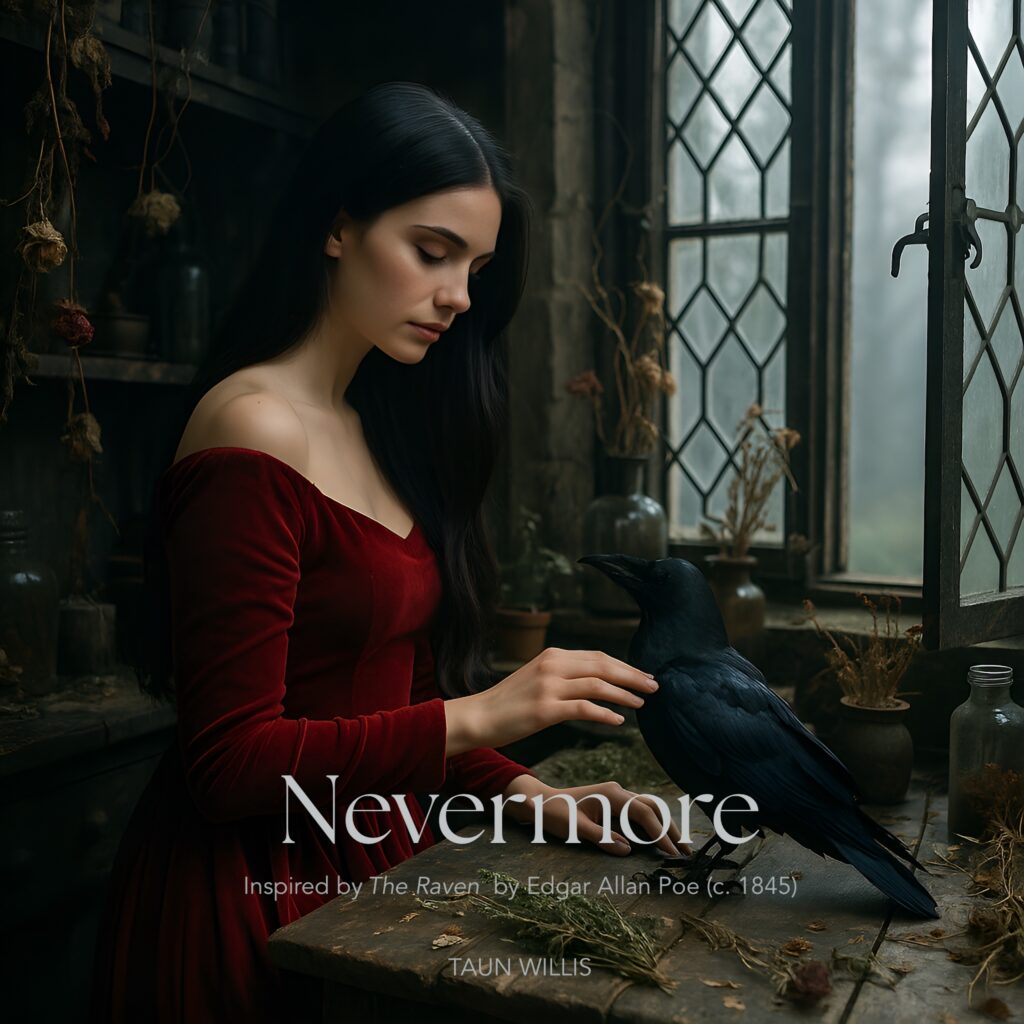
Music has become another extension of Willis’s creativity—a different medium through which he can explore the same ideas, emotions, and imagined worlds that shape his writing. He composes original music inspired by his fiction, often using songs and albums to deepen the atmosphere, characters, and emotional landscapes of the stories he creates. His work ranges from reflective and cinematic pieces to contemporary alternative styles, combining traditional musicianship with modern digital production. For Willis, music is another form of storytelling, capable of expressing moods, tensions, and ideas that words alone cannot always capture.
Looking Forward – これから
Willis’s work has never followed a single path. It has moved through technology, business, science, education, fiction, and music, with each field informing the next. What connects those pursuits is not simply versatility, but a persistent desire to understand how things work, to test the limits of accepted ideas, and to create something meaningful from what he discovers.
He continues to write, compose, teach, research, and develop new ideas. The subjects may change, but the impulse behind them remains the same: curiosity, independence, and a willingness to follow difficult questions wherever they lead.
ウィリスの歩みは、これまで一つの道に収まったことがない。テクノロジー、ビジネス、科学、教育、フィクション、音楽へと活動の場を広げながら、それぞれの分野で得た経験が次の探究へとつながってきた。そこに共通しているのは、単なる多才さではない。物事がどのように成り立っているのかを理解し、既成概念の限界を確かめ、そこから意味のあるものを生み出そうとする一貫した姿勢である。
現在も、小説を書き、音楽を作り、学生を教え、研究を続け、新たなアイデアを形にしている。取り組むテーマは変わっても、その原動力は変わらない。好奇心、自立した思考、そして難しい問いがどこへ導こうとも、それを追い続ける意志である。